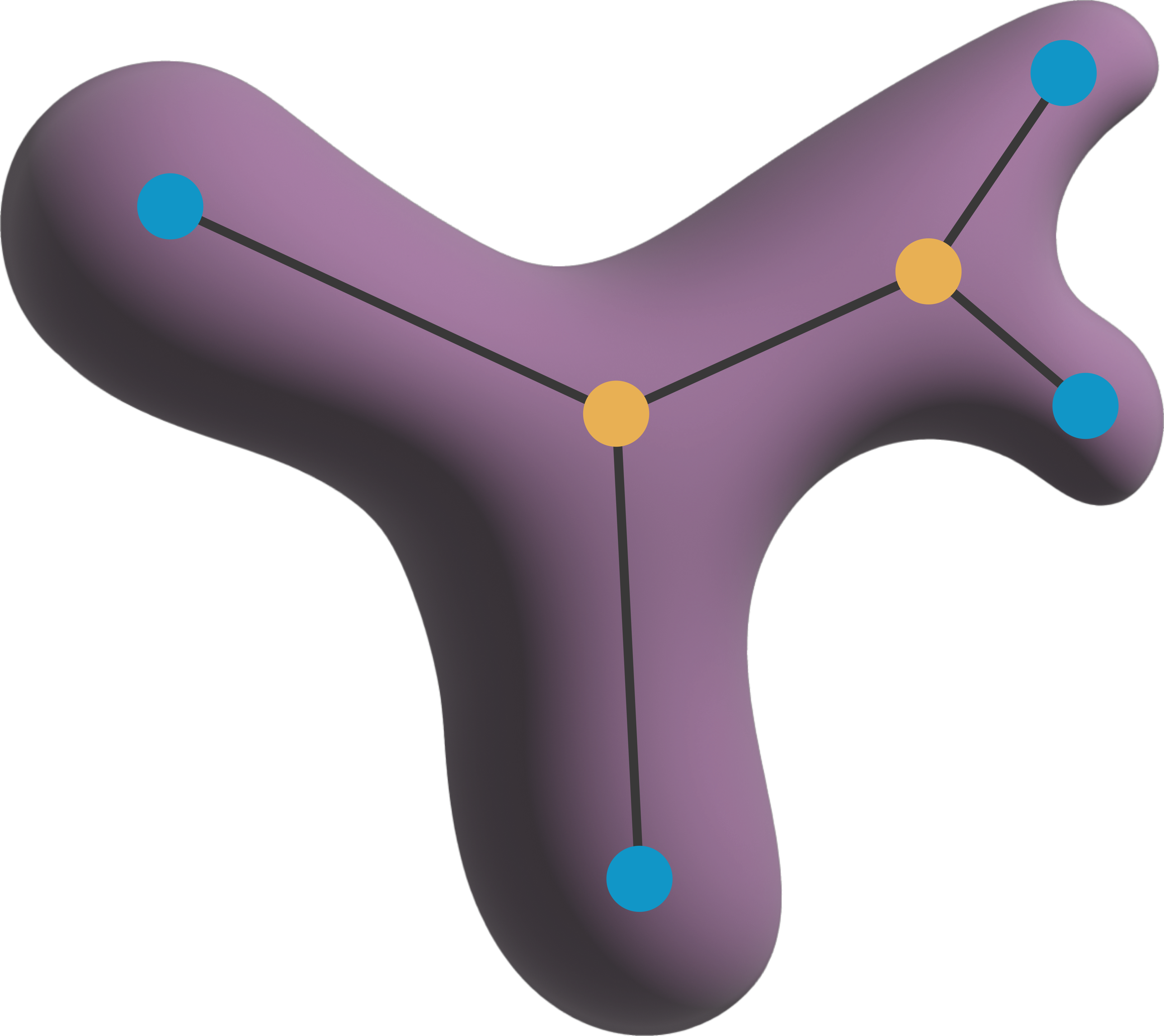
Measurement#
- napari_toska.analyze_single_skeleton(parsed_skeleton: napari.types.LabelsData, neighborhood: str = 'n8') DataFrame[source]#
Analyze a single skeleton and return a pandas dataframe.
This function calculates the following measurements for a single skeleton: - number of end points - number of branch points - number of nodes - number of branches - spine length (in network), number of edges in spine - spine length (in image), number of pixels in spine - number of cycle basis - number of possible undirected cycles
- Parameters:
parsed_skeleton ("napari.types.LabelsData") – A parsed labeled image of a skeleton.
neighborhood (str, optional) – The neighborhood used for the skeletonization, by default “n8”. For 2D images, use “n4” or “n8”. For 3D images, use “n6”, “n18” or “n26”.
- Returns:
df – A pandas dataframe containing the measurements.
- Return type:
pd.DataFrame
- napari_toska.analyze_skeletons(labeled_skeletons: napari.types.LabelsData, parsed_skeletons: napari.types.LabelsData, neighborhood: str = 'n8', viewer: napari.Viewer = None) DataFrame[source]#
Analyze a skeleton image and return a pandas dataframe.
This function runs the analyze_single_skeleton function for every skeleton in the image and returns a pandas dataframe containing the measurements.
- Parameters:
labeled_skeletons ("napari.types.LabelsData") – A labeled image of skeletons.
parsed_skeletons ("napari.types.LabelsData") – A parsed labeled image of skeletons.
neighborhood (str, optional) – The neighborhood used for the skeletonization, by default “n8”. For 2D images, use “n4” or “n8”. For 3D images, use “n6”, “n18” or “n26”.
- Returns:
df_all – A pandas dataframe containing the measurements.
- Return type:
pd.DataFrame
- napari_toska.analyze_single_skeleton_network(parsed_skeleton_single: napari.types.LabelsData, neighborhood: str = 'n8') DataFrame[source]#
Analyze a single skeleton and return a pandas dataframe.
This function categorizes ever element of the network representation of a skeleton as either a node or an edge and potentially its weight.
- Parameters:
parsed_skeleton_single ("napari.types.LabelsData") – A parsed labeled image of a skeleton.
neighborhood (str, optional) – The neighborhood used for the skeletonization, by default “n8”. For 2D images, use “n4” or “n8”. For 3D images, use “n6”, “n18” or “n26”.
- Returns:
features – A pandas dataframe containing the measurements.
- Return type:
pd.DataFrame
- napari_toska.calculate_branch_lengths(branch_label_image: napari.types.LabelsData, viewer: napari.Viewer = None) DataFrame[source]#
Calculate the branch length for each branch in a branch image.
This function calculates the branch length for each branch in a branch image. The branch length is calculated as the number of pixels in the branch and takes into account the adjacency relationship between subsequent pixels/voxels in a branch.
- Parameters:
branch_label_image ("napari.types.LabelsData") – A labeled image of an individual skeleton’s branches.
- Returns:
df – A pandas dataframe containing the branch length for each branch.
- Return type:
pd.DataFrame